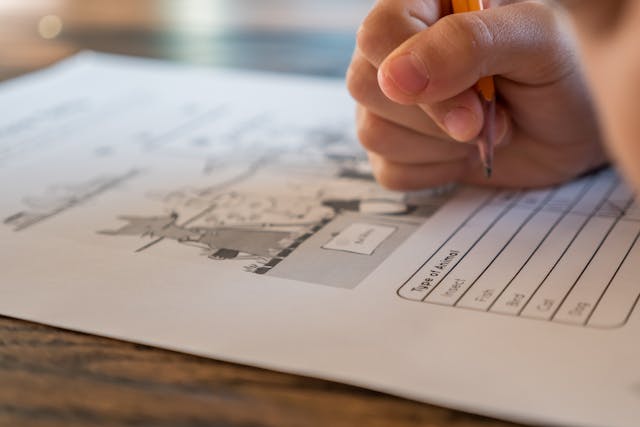
Let’s be real, trying to get things done while your elementary-aged children are doing homework can feel like riding a rollercoaster with your hands full. Math worksheets, spelling tests, and science projects are everywhere, and if you’re searching for practical homework tips for busy parents, it’s easy to think, “Forget it, I’ll never get anything done.”
The good news is you can be productive while your kids are learning without losing your sanity, even if it sometimes feels overwhelming. As a former teacher and now a parent, I’ve learned how to navigate the chaos one day at a time.
Homework Tips for Busy Parents
I want to share 10 homework tips that have helped me manage daily homework with my daughter and that I hope will help you too.
1. Set a routine that works for everyone.
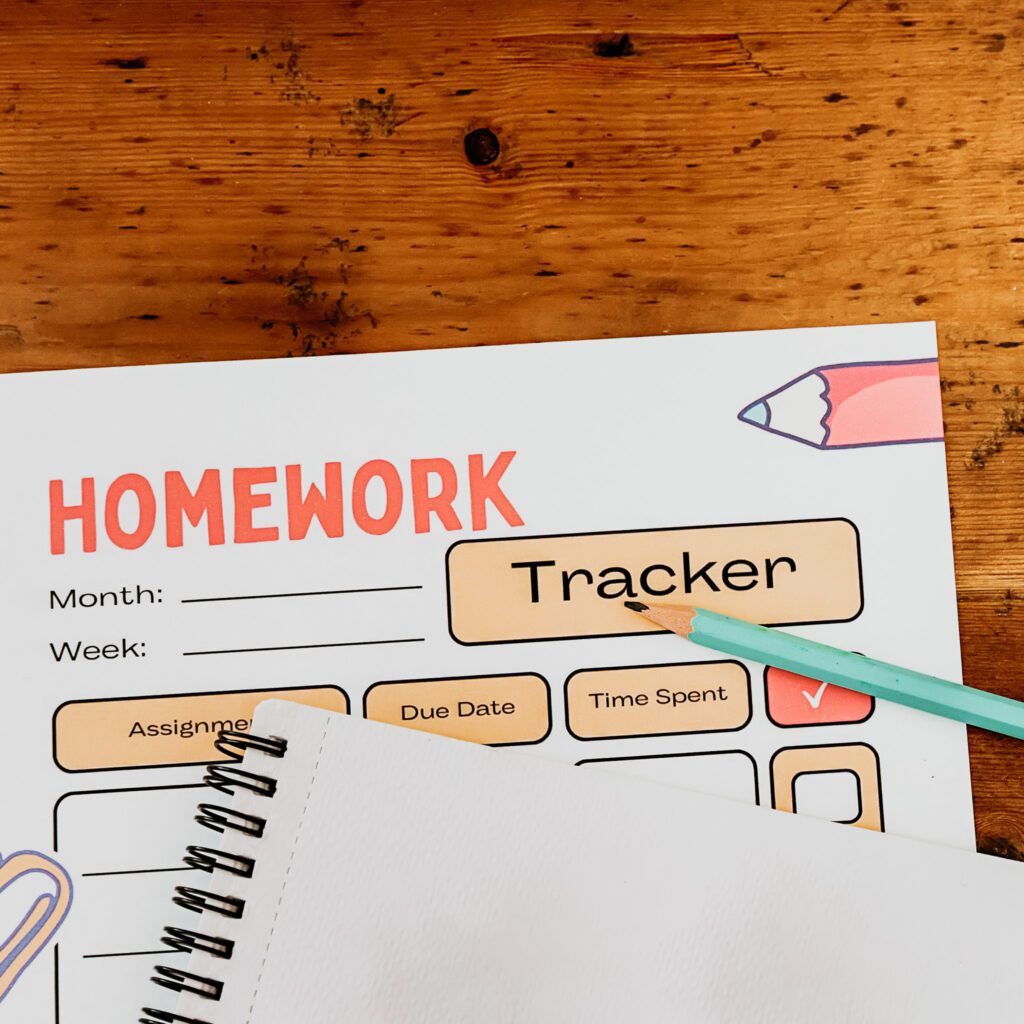
Children do better with consistency, and honestly, so do we. Pick a time each day, maybe after school, after snack time, or right before dinner, for focused study. When everyone knows what’s coming, homework battles can minimize.
2. Create a “Homework Zone.”
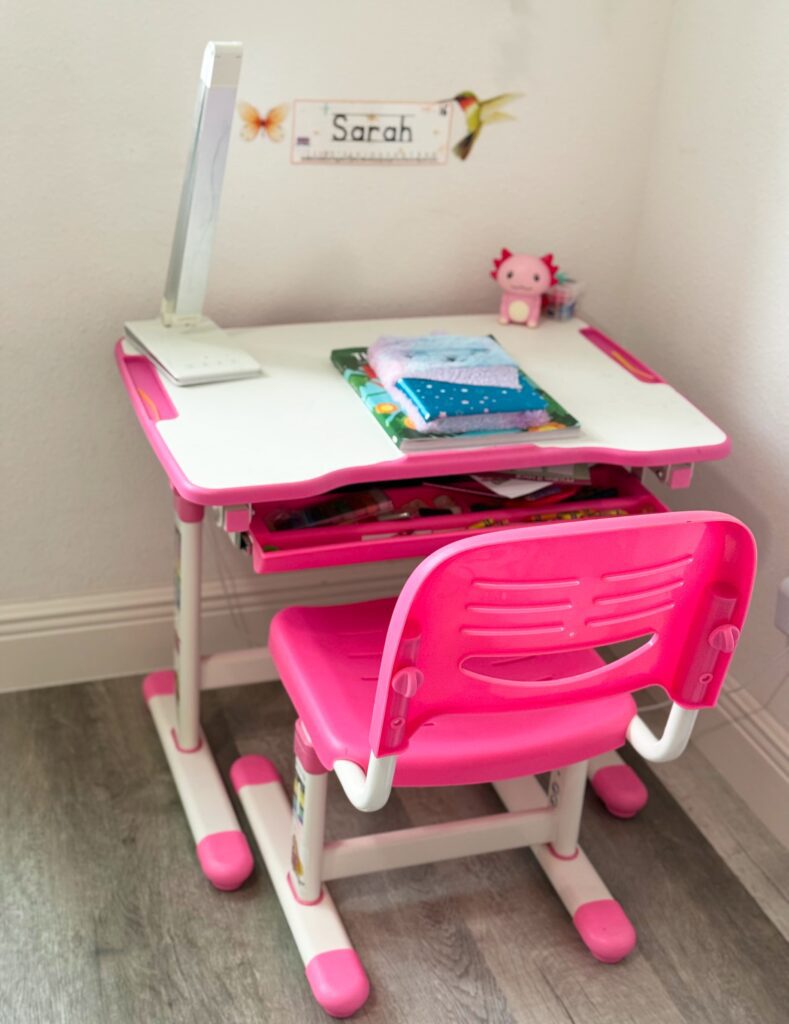
It doesn’t need to be fancy, just a consistent spot where your kids can work without distractions. That means no TV, iPad, or any other electronic devices. For example, my daughter uses a corner of our multipurpose room with her pink and white adjustable desk and supplies.
Keep essentials like pencils, erasers, crayons, a ruler, and paper within reach. The fewer reasons to get up, the smoother the study time will be.
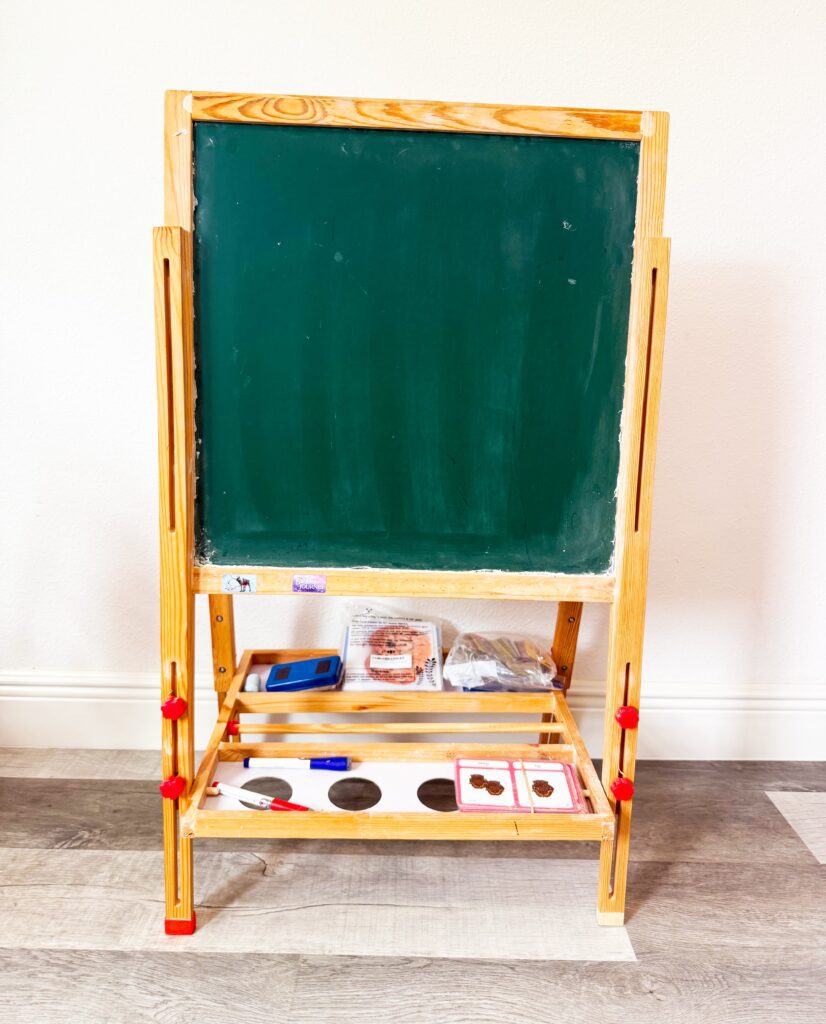
I also have a small white board, which is great for reviewing and explaining topics.
3. Keep sessions short.
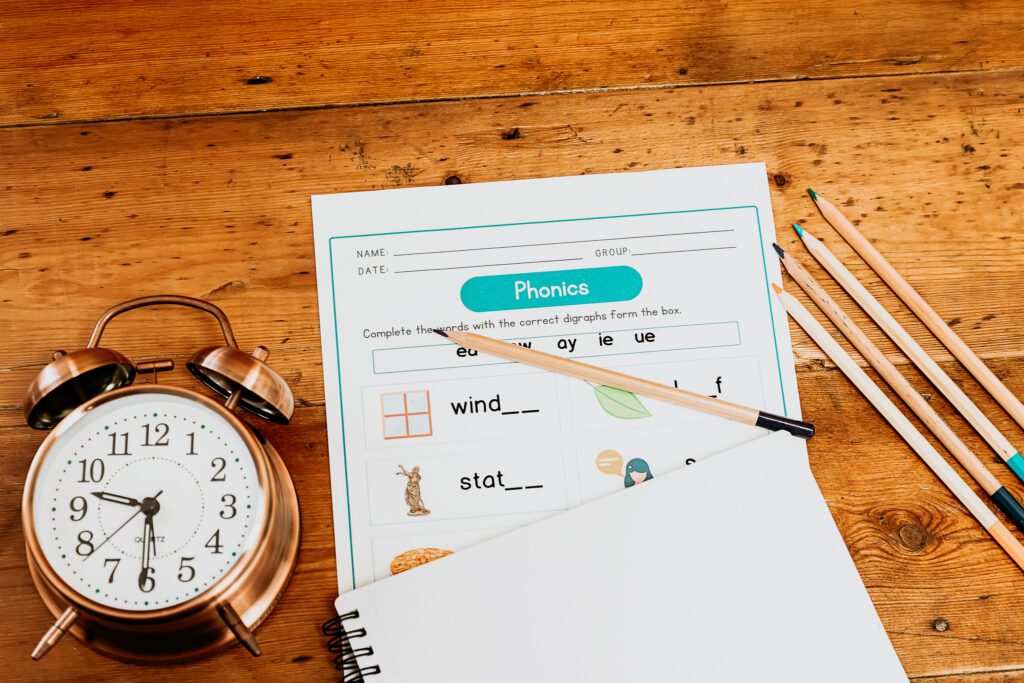
Elementary children’s attention spans are short, so aim for 10 to 20 minutes of focused work. Then take a short break, stretch, grab a snack, or do a quick game. These mini breaks give both you and your kids a chance to reset.
4. Have good communication with your child’s teacher.
I highly recommend maintaining good communication with your child’s teacher from the beginning of the school year. Some tips to make this easier include:
- Read emails carefully: Pay attention to messages from the teacher and any updates about the class.
- Clarify questions via email: If anything is unclear, don’t hesitate to ask for clarification.
- Set an appointment if needed: Meeting in person or virtually can help you better understand the teacher’s style and expectations.
- Adapt to their teaching style: Knowing how your child is being taught can help you support their learning at home.
5. Conduct your own research.
Studying with your child can be a nightmare if you do not understand what you need to study. I do not know about you but adapting to the school system and how it differs from what it was when I was in school and also how to differs from how it is in my home country can be challenging.
I am used to notebook and pencil and being able to view daily what is covered in class. However, nowadays, everything is on a laptop and communication is through email and some things are simply not clear.
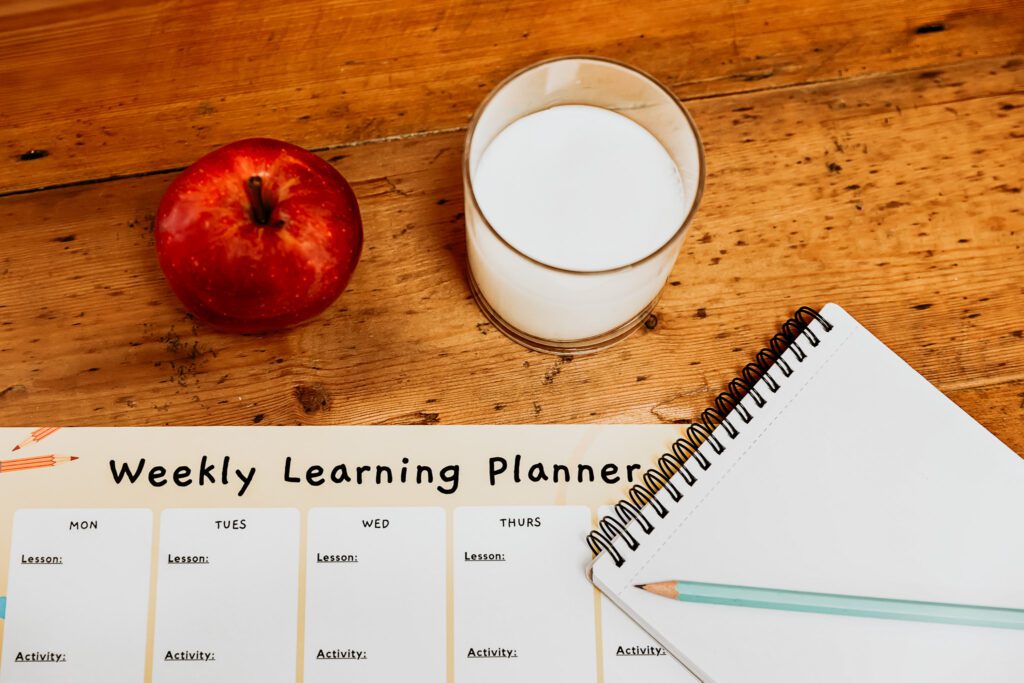
From my experience with my elementary school–aged daughter, most teachers send a weekly schedule outlining the standards they’re covering in class, which is really helpful. However, at first, I felt lost when I didn’t see any worksheets or examples. I wasn’t sure if I had misread something or if I was missing materials. This is where communicating with the teacher becomes essential, as mentioned in Tip #4.
I’ve also learned that being resilient and going above and beyond makes a big difference. As a former teacher, I often look up the standards myself and find worksheets on sites like Teachers Pay Teachers, or practice activities on platforms such as IXL. IXL even offers a free number of activities each day, which is perfect for supplementing learning at home.
6. Make studying fun.

Use highlighters, color pencils, flashcards, or even a karaoke-style reading or spelling game to make learning fun. When kids are engaged and enjoying themselves, they’re less likely to get distracted, and you can sneak in a few focused minutes yourself. Some skills can even be reinforced during family bonding activities.
7. Encourage independent work.
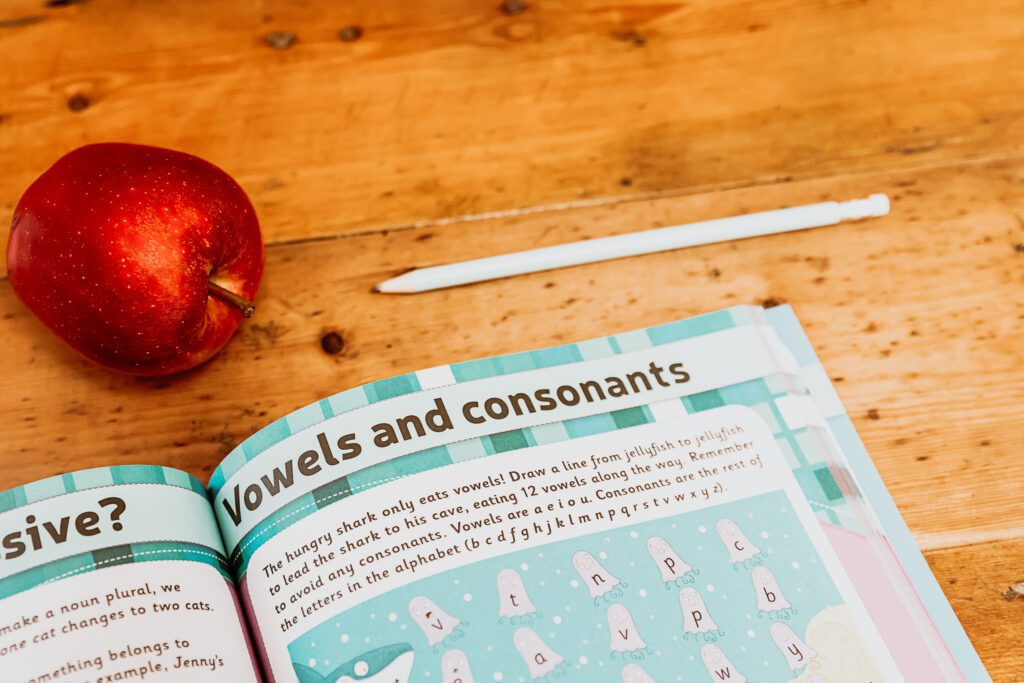
Children need to learn to work independently. Teach them to try first before asking for help. Give them worksheets, reading assignments, or other tasks. While they work, you can do light cleaning or prep for your own tasks. It’s a win-win.
8. Use a timer.

Timers are your friend. Set 10-to-15-minute focus blocks for everyone. When the timer goes off, check in, answer questions, then start another round. It keeps everyone on track and gives kids a sense of accomplishment.
9. Purchase relevant workbooks or exercises.
Pick up grade-level workbooks or printable practice pages for math, handwriting, phonics, and reading comprehension. As a former teacher, I’ve seen how structured, bite-sized practice builds confidence. Look for options with short, independent pages your child can complete in a single focus block.
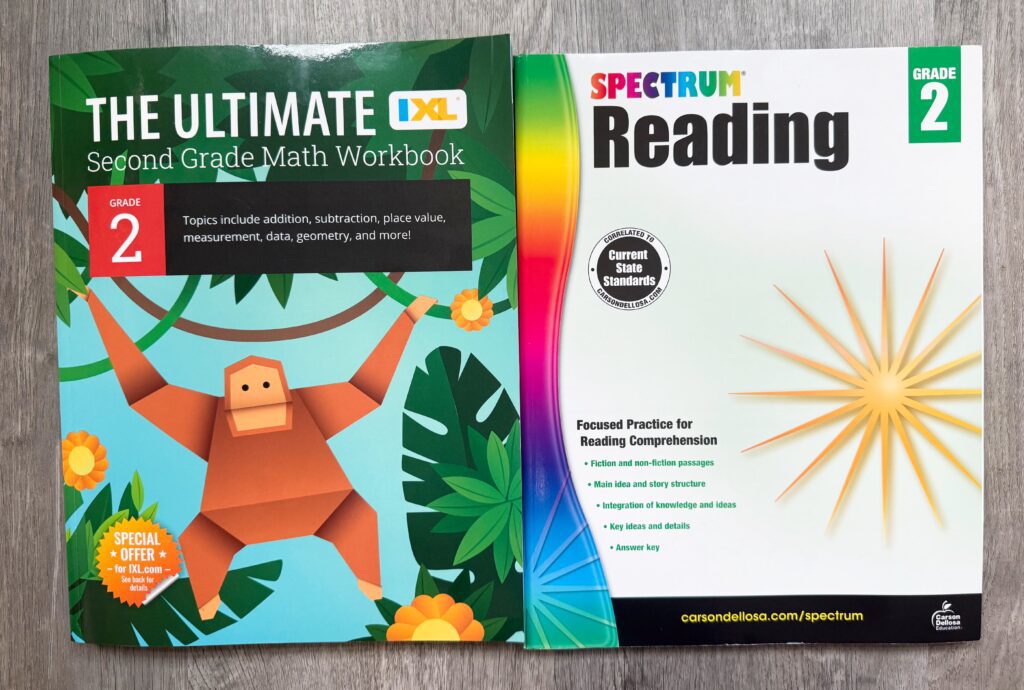
Set aside a few pages for the week in your homework basket so your child can get started right away. If you’re using a workbook, mark the pages in advance for quick access. Rotate topics to cover a variety of skills, and use the answer keys for quick self-checks before you step in. Many affordable resources can be found on Amazon, as well as excellent teacher-created worksheets on Teachers Pay Teachers.
10. Celebrate small wins.
Kids love recognition and so do we. Stickers, extra playtime, or a little snack for finishing tasks goes a long way. Rewarding their effort and encouraging them for trying their best, helps them stay motivated and productive.
12. Keep your expectations realistic.
Remember, your kids are still learning and growing, and their focus will naturally come and go. Use study sessions for activities they can handle independently or with minimal guidance. Save the most challenging or structured lessons for times when they’re rested, calm, and ready to fully engage.
Final Thoughts
Studying with your kids doesn’t have to mean chaos. Structure, short, focused sessions, independent work, and a little fun go a long way. These simple homework tips for busy parents can help you stay productive without burning out.
As a teacher-turned-parent, I can say productivity isn’t about doing everything perfectly, it’s about making progress, staying sane, and maybe even enjoying the process along the way.
Best wishes,
Mel