
I imagine you’ve heard countless times that positive self-talk is good for you. Yet maybe you haven’t put it into practice because it feels a little silly, doesn’t seem worth the effort, or perhaps you’ve tried it before and felt it didn’t make a difference.
The truth is, positive self-talk isn’t a magic pill. You don’t speak kindly to yourself one day and suddenly all your problems disappear. Instead, it’s a reflective practice that requires consistency. Like any healthy habit, its benefits build over time.
Research on Positive Self-Talk

According to researchers in a 2022 study published in Behavioral Sciences, positive self-talk is positively associated with mindfulness and self-compassion.
But what do those terms actually mean?
Mindfulness is “the practice of being aware of your body, mind, and feelings in the present moment, thought to create a feeling of calm” (Cambridge Dictionary, n.d.). In other words, it’s learning to notice your thoughts and feelings without immediately judging yourself for them.
Self-compassion builds on that awareness. According to self-compassion researcher Kristin Neff, self-compassion means treating yourself with the same kindness, care, and understanding you would offer a good friend during difficult times (Neff, n.d.). Instead of criticizing yourself for your mistakes, you acknowledge that imperfection is part of being human.
As mothers, we are often our own harshest critics. We want everything to be perfect and feel guilty when we can’t meet everyone’s needs. That’s where negative self-talk begins to take over, filling our minds with self-criticism and making it difficult to extend the same compassion to ourselves that we so freely give to others. Give yourself grace and love.
The Healing Power of Positive Self-Talk
I can say I have been an optimistic person for most of my life because that is what my parents taught me. That doesn’t mean I never had problems, but I chose to look at the bright side even during struggles or failures.
I have cried, felt unworthy, and felt mentally blocked at times, but I have learned that every experience can carry a lesson. We grow through mistakes, setbacks, and life events. When needed, I take a step back, allow myself to rest, and then I get back up and keep trying.
In the context of achieving goals, I’ve been reading Feel the Fear and Do It Anyway, and she explains how the fear of failure can keep us from pursuing our goals. When we’re afraid of making mistakes, our inner critic grows louder, making it even harder to take the next step.
After reading books, articles, and working with a therapist, one insight I’ve found is that saying positive statements out loud can be more powerful than just thinking them. Writing them down and placing them somewhere visible can also serve as a helpful reminder. Over time, when a negative thought arises, you can learn to reframe it into something more constructive.
Positive Affirmations
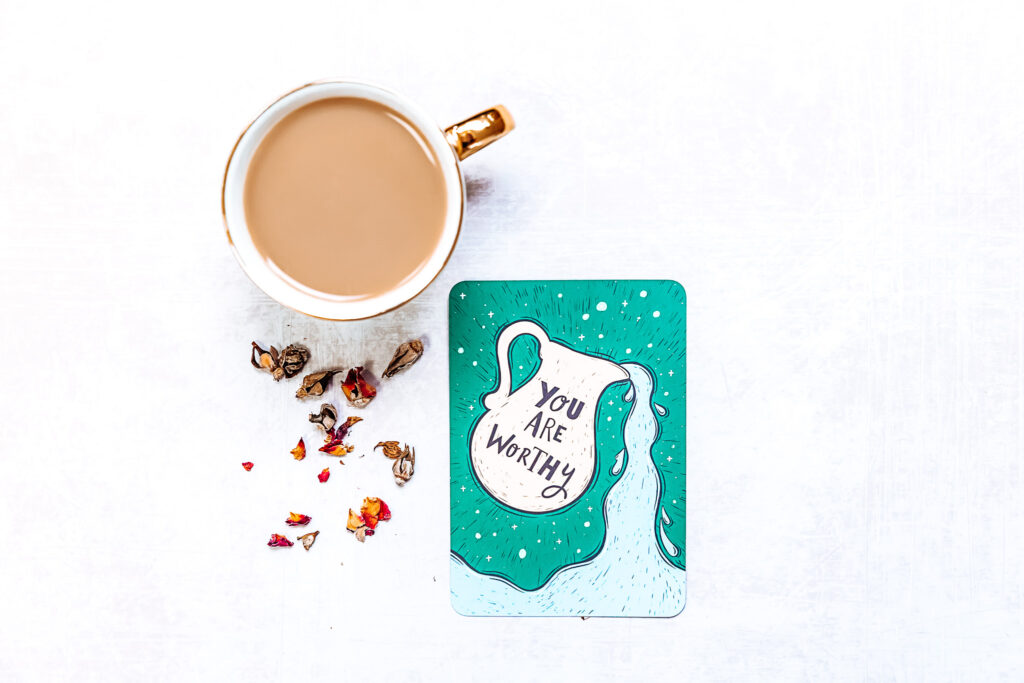
I can do this.
I am capable.
I am growing.
I am a good mother and wife.
Positive self-talk is not only about thinking or speaking kindly to yourself, it also involves taking action toward your personal and professional goals.
If we don’t learn to guide our thoughts, they can sometimes contribute to increased anxiety and overwhelm, making it harder to fully enjoy life.
I know it is easier said than done when you are dealing with a health crisis or grief. In those moments, prayer, meaning-making, and professional support can all play an important role in healing. When going through difficult times, it is common to feel powerless, sad, and exhausted, and these situations often require time, care, and support.
In the past couple of months, I have been dealing with a diagnosis that led to new health complications, which resulted in surgery. It has been one of the hardest times of my life. I have had to rely on prayer and positive self-talk while also learning to manage anxiety and not let fear take over. It has been a rollercoaster of emotions, but I am here today continuing to choose hope and healing.
Final Thoughts
I don’t know what you’re going through, but I encourage you to be gentle with yourself and practice positive self-talk. Lean on resources such as books, podcasts, supportive conversations with therapists and friends, and moments of rest and joy.
Best wishes,
Mel
References
Cambridge University Press. (n.d.). Mindfulness. In Cambridge Dictionary. https://dictionary.cambridge.org/dictionary/english/mindfulness
Grzybowski J, Brinthaupt TM. Trait Mindfulness, Self-Compassion, and Self-Talk: A Correlational Analysis of Young Adults. Behav Sci (Basel). 2022 Aug 23;12(9):300. doi: 10.3390/bs12090300. PMID: 36135104; PMCID: PMC9495966
Neff, K. D. (n.d.). What is self-compassion? Self-Compassion.org. https://self-compassion.org/what-is-self-compassion/