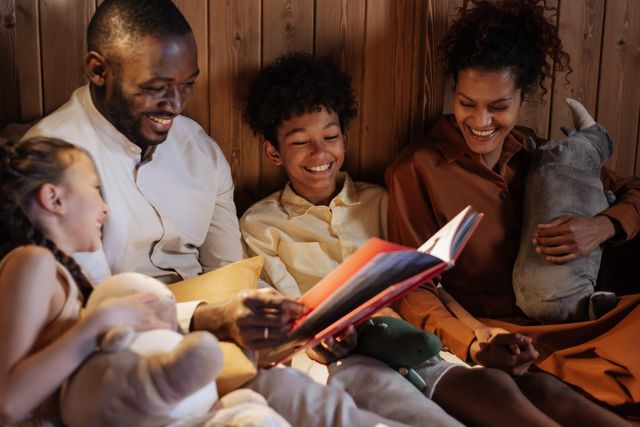
Reading with your child is one of the most meaningful family bonding activities, offering emotional and educational benefits.
According to the Child Mind Institute, reading together supports building children’s language skills, developing empathy, and helping them manage their emotions.
Reading to Babies and Toddlers

I started reading to my daughter when she was a baby, and I encourage all parents to do the same. The more you expose your children to books, the more they will learn.
I highly recommend the following types of books:
- Picture books
- Touch and feel books with different textures
- Books with sounds
If the book does not have sounds and there are sound words in the story, act out the sound and be very expressive when reading. Use your hands to demonstrate concepts such as length, size, and texture.
If the book is about parts of the body, ask questions such as, “Where is your nose?” Then gently touch your baby’s nose and say, “I found your nose!” Repeat this with different body parts.
If the book mentions objects that you have at home, ask your child to find and bring them to you.
Use your imagination and make reading fun.
Reading in Initial Stages
As a former teacher and mother, I want to give some recommendations of books or resources that can be useful for young readers.
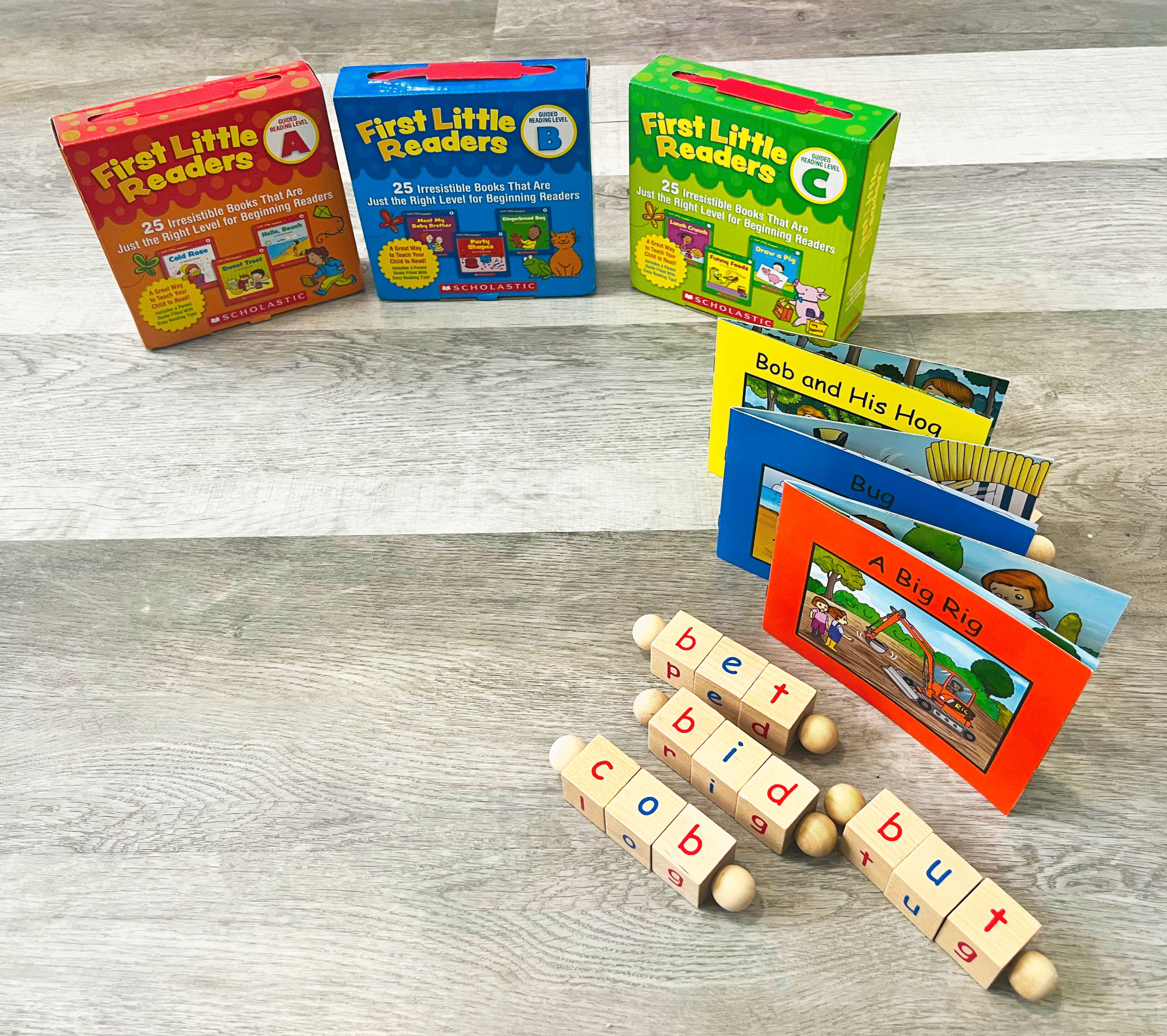
If your child is struggling or are in the initial stages of reading, I recommend the following books:
- ChildLearn Montessori Alphabet Beginning Reader Letter Blocks
- First Little Readers Parent Pack: Guided Reading Level A
- First Little Readers Parent Pack: Guided Reading Level B
- First Little Readers Parent Pack: Guided Reading Level C
When they have acquired more vocabulary and feel more confident about reading, do the following:
- Help your children select books based on their interests and that spark their curiosity.
- Select varied types of books, including fiction and non-fiction.
Note: Be sure that the books are appropriate for their age and reading level.
Set a routine for reading.
It can be before bed, in the afternoon, or any time you think feasible with your busy schedule. As you read, complete the following:
- Ask questions about characters, settings, and events.
- Encourage your children to make predictions and inferences.
- Let your children explain the meaning of new vocabulary words by using context clues.
- Review capitalization and punctuation.
- Ask your children what they learned from the story.
Here is a list of some of my daughter’s favorite books:
| Book | Author | Topic/Focus |
| The Rainbow Fish | Marcus Pfister | Friendship, Sharing |
| The Very Hungry Caterpillar | Eric Carle | Sequencing, Numbers, Colors, Food |
| A Mother for Choco | Keiko Kasza | Adoption, Family |
| The Little Engine That Could | Watty Piper | Cooperation, Working Together, Empathy, Determination |
| Be Brave, Little Penguin | Giles Andreae | Perseverance |
| Whose Tail is on the Trail at Grand Canyon? | Midji Stephenson | Wildlife, Repetition |
| Llama Llama Loves to Read | Anna Dewdney | Determination, Motivation. Rhyming |
| The Cat in the Hat | Dr. Seuss | Trust, Rhyming |
| Groovy Joe Ice Cream and Dinosaurs | Eric Litwin | Sharing, Rhyming, Repetition |
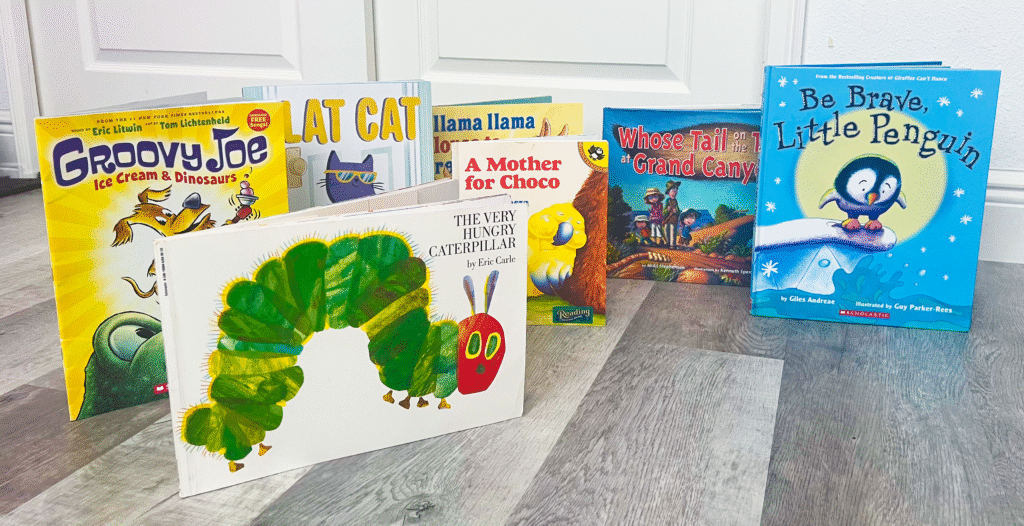
If you do not have the budget to purchase books, go to a local library and borrow them.
I also recommend checking out News World Reading if you live in the United Stated. After you sign up, you receive free books for your children. Based on my selection, I receive books in English and Spanish as seen below.
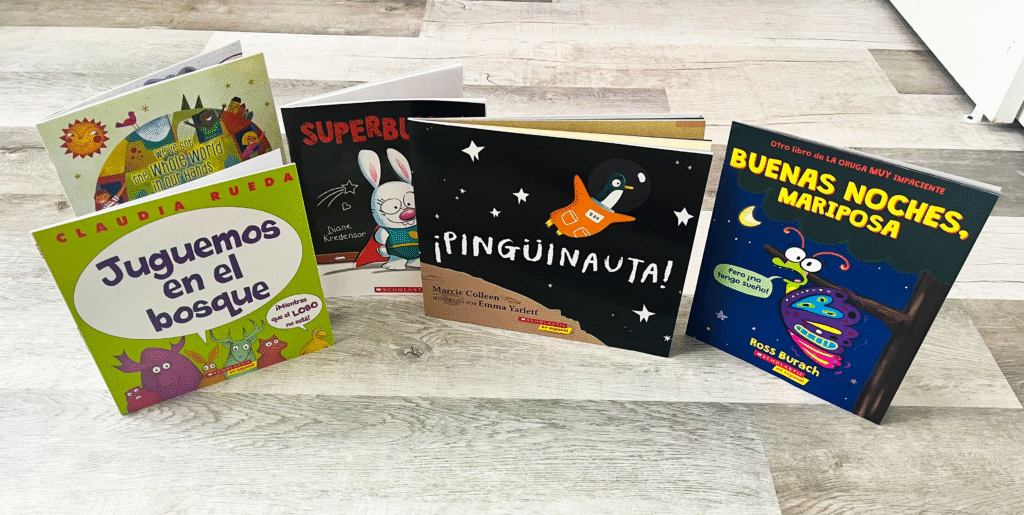
Examples of Reading Activities
When reading with your child, think of activities that encourage questions, creating conversations, crafts, games, and shared experiences that reinforce each story’s message while making reading a fun family tradition.
The Rainbow Fish by Marcus Pfister
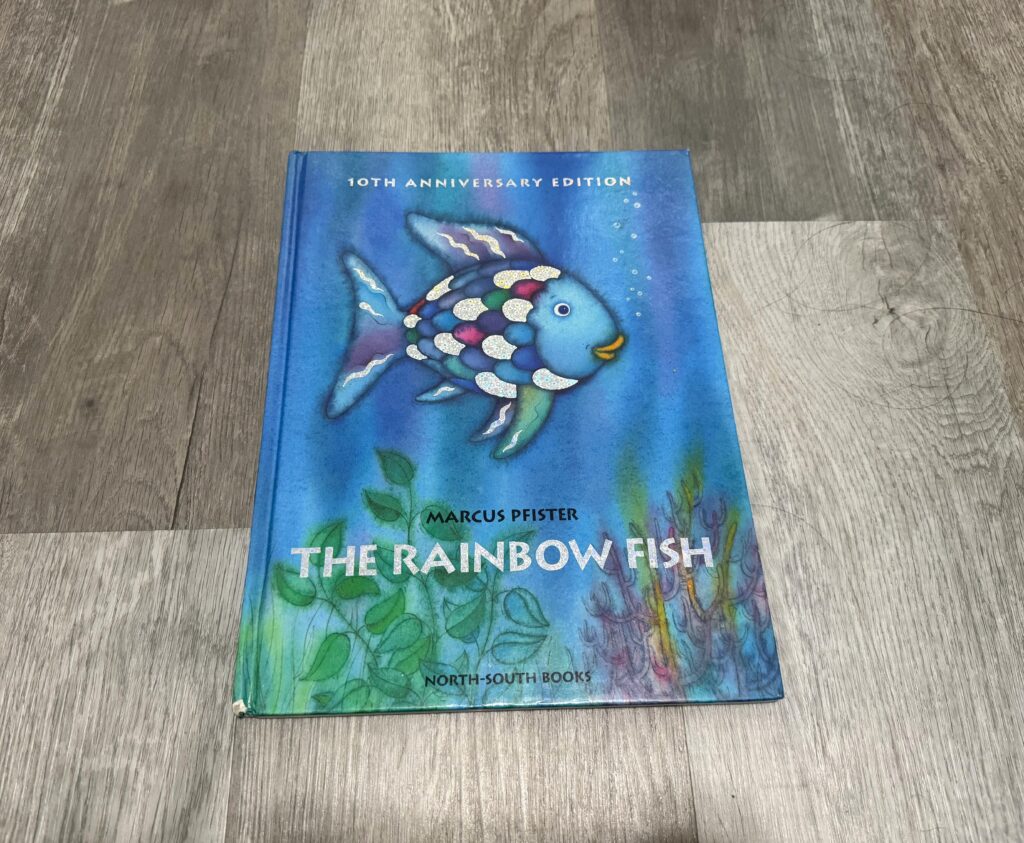
The Rainbow Fish tells the story of the most beautiful fish in the ocean, whose shimmering scales make him the envy of all the other fish. Although the other fish admire him and want to be his friend, Rainbow Fish refuses to share his special scales and chooses to keep them all for himself.
One day, an octopus encourages Rainbow Fish to share his scales with others. At first, he is reluctant, but after giving one sparkling scale to a small fish, he discovers the joy that comes from kindness and generosity.
As Rainbow Fish shares more of his scales, he gains something even more valuable than beauty, true friendship. This story teaches children that sharing, kindness, and friendship bring lasting happiness.
Family Reading Activities
- Create your own Rainbow Fish using construction paper and aluminum foil or glitter for the shiny scales.
- Talk about what it means to share. Ask each family member to share a time when someone was kind to them.
- Make a “Kindness Scales” chart. Every time someone performs a kind act, add a paper scale to your family’s Rainbow Fish.
- Visit a local aquarium and identify different types of fish together.
- Practice sharing by playing a family game or completing a puzzle together.
Arts and craft activities: Activities and Crafts – The Rainbow Fish
The Very Hungry Caterpillar by Eric Carle
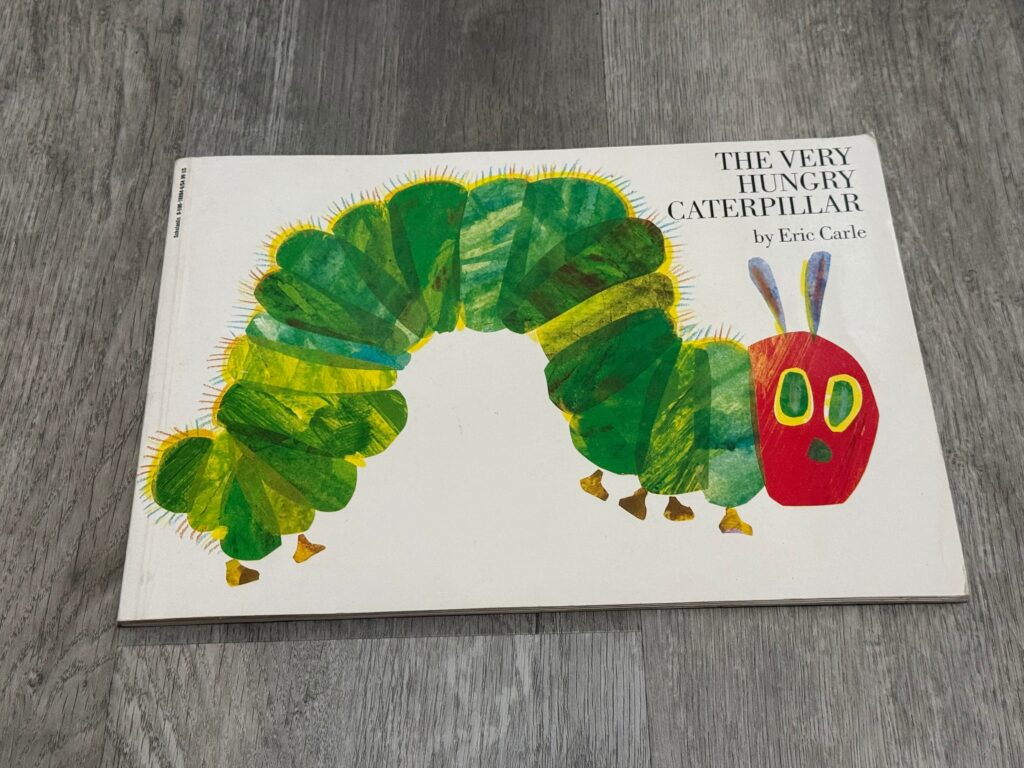
The Very Hungry Caterpillar follows the journey of a tiny caterpillar that hatches from an egg and spends each day eating different foods as he grows. After eating a variety of fruits and treats throughout the week, he forms a cocoon and eventually emerges as a beautiful butterfly.
This story introduces children to the days of the week, counting, colors, healthy foods, and the life cycle of a butterfly in a fun and engaging way.
Family Reading Activities
- Create a caterpillar craft using pom-poms, paper circles, or painted handprints.
- Practice counting the foods the caterpillar eats. Sort fruits and vegetables by color.
- Plant flowers together to attract butterflies.
- Visit a butterfly garden or nature center.
- Make healthy snacks using some of the fruits from the story.
- Sequence the story by placing picture cards in the correct order.
Arts and craft activities: Downloads and Activities | Eric Carle
A Mother for Choco by Keiko Kasza
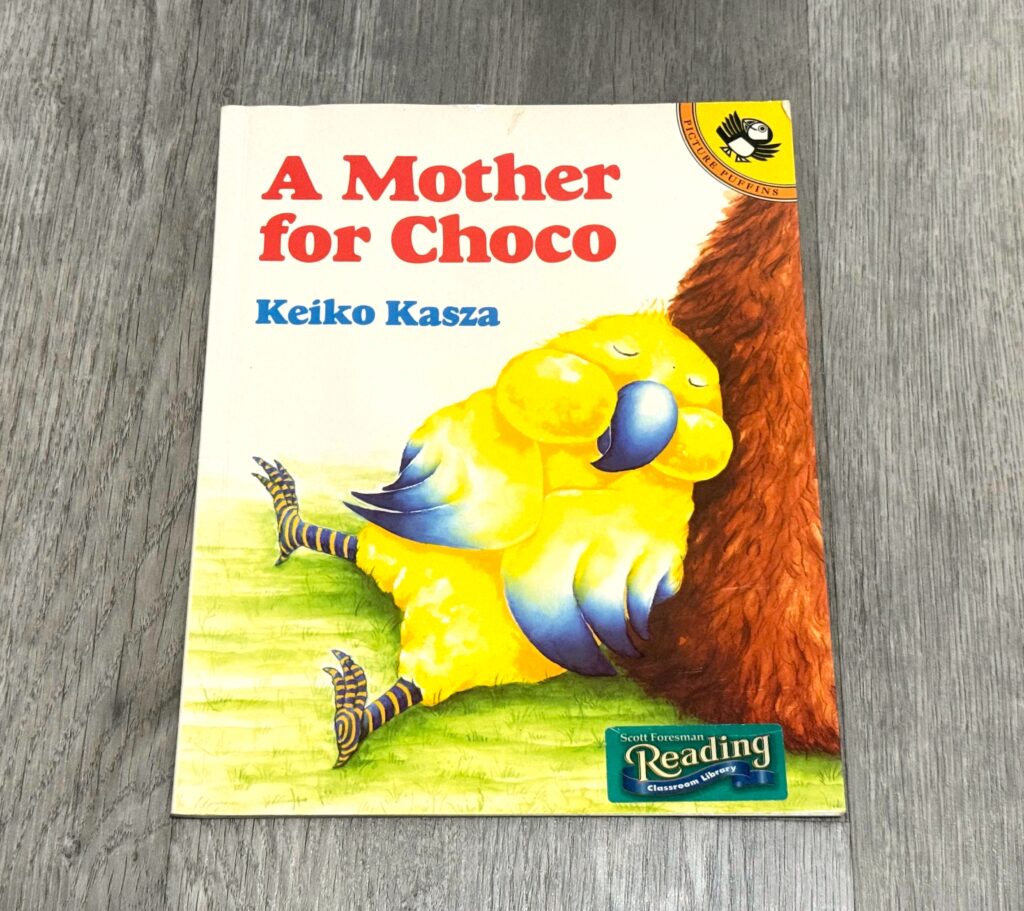
A Mother for Choco is a heartwarming story that celebrates the many different ways families are formed. Choco, a little bird, is searching for his mother. Along the way, he meets several animals who share some of his physical features, but each kindly tells him they are not his mother.
Feeling lonely and discouraged, Choco eventually meets Mrs. Bear, who looks nothing like him. Mrs. Bear warmly welcomes Choco into her family, which also includes a piglet, a hippo, and an alligator.
Through Mrs. Bear’s love and acceptance, Choco learns that families are built on love, care, and belonging, not on appearances. This story is a way to introduce children to adoption, diversity, and the many beautiful forms a family can take.
Family Reading Activities
- Draw your family and talk about what makes each member special.
- Create a family tree or “family collage” using photos and drawings.
- Discuss the many different kinds of families and what they all have in common.
- Read books featuring diverse family structures.
- Write or share one thing you love about each member of your family.
- Make a “Family Means Love” poster together.
The Little Engine That Could by Watty Piper
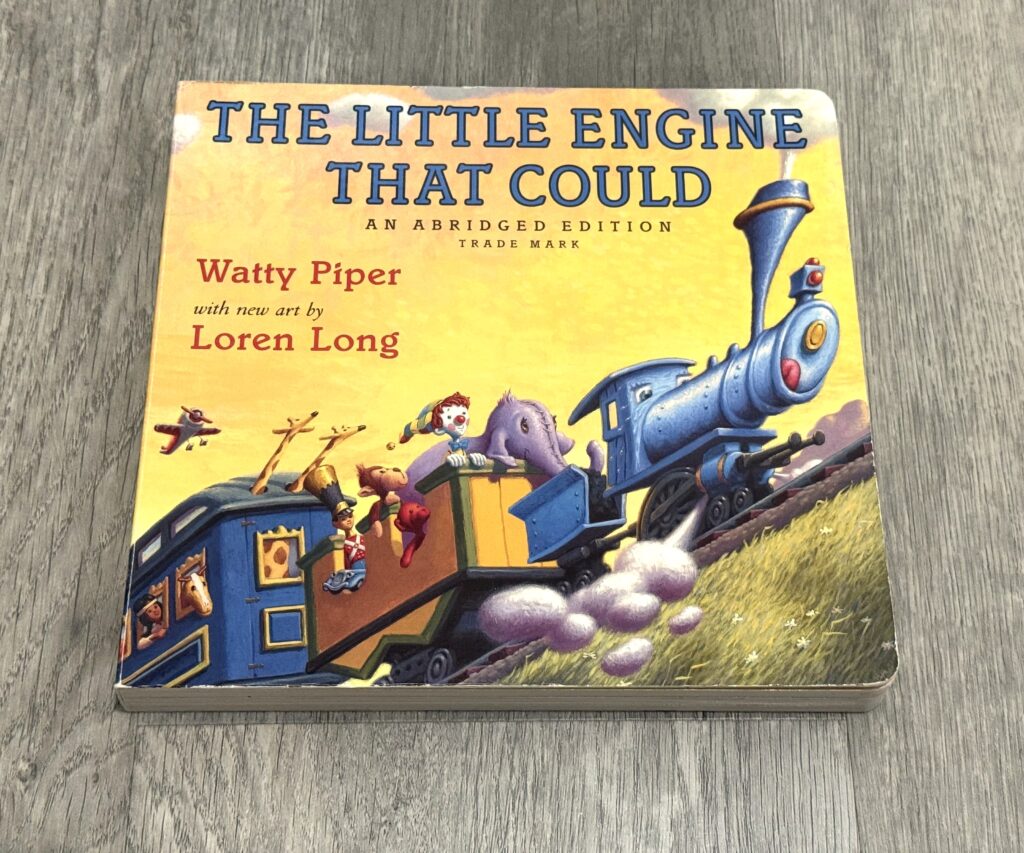
The Little Engine That Could is a story about determination, perseverance, and believing in yourself. When a train carrying toys and food for children cannot make it over a mountain, several larger engines refuse to help. A small blue engine decides to try, repeating the encouraging words, “I think I can, I think I can.”
Despite the challenge, the little engine reaches the top of the mountain through hard work and persistence. The story reminds children that with a positive attitude, determination, and effort, they can overcome obstacles and achieve their goals.
Family Reading Activities
- Build a train using blocks, cardboard boxes, or recycled materials.
- Talk about a time each family member faced a challenge and didn’t give up.
- Create a family “I Think I Can” affirmation poster.
- Set a small family goal (such as finishing a puzzle or learning a new skill) and celebrate when you accomplish it together.
- Pretend to be trains by creating an obstacle course around the house or yard.
- Visit a train museum or watch trains if there’s a railroad nearby.
Arts and craft activities: The Little Engine That Could: Activity Guide
How to Motivate My Child to Read
- Be a role model. As parents we emphasize the importance of reading for our children, but sometimes we do not sit down to read ourselves. If you want to motivate your child to read, be the role model.
- Establish a family reading time. Every family member grabs a book of choice and dedicates time to reading. If the book is long, determine how many pages or chapters will be read. You can even use a timer to set the length of time for …
- Connect reading to real life experiences. When reading realistic fiction stories, children can identify with characters and learn to deal with emotions and solve problems.
- Visit the library. Local libraries is the perfect atmosphere for reading. Libraries have different activities for children of all ages. Furthermore, when children see other children reading, they can feel motivated to read too.
Final Thoughts
Making reading a family activity is a wonderful way to learn while creating meaningful connections with your loved ones.
What is your family’s favorite book to read together?
Best wishes,
Mel